
Route inspection
Define the start, destination, route and obstacles. Record the map, robot trajectory and any human intervention.
Applications / Mining inspection
We are developing the Q1 quadruped platform and OmindOS together for underground inspection, drawing on metal mine field research into access, equipment inspection and review of results.
Tasks and records
These tasks provide a starting point for research and joint validation. Each requires defined inspection targets, data collection methods and assessment criteria.
Define the start, destination, route and obstacles. Record the map, robot trajectory and any human intervention.
Assess image and temperature capture at inspection points such as pump rooms, conveyors and pipelines. Select sensors for the specific task.
Agree on timestamps, locations, equipment identifiers and original images. Route findings to people for review and define any connections to existing systems.
Operating conditions
Mine type, operating area and site conditions determine the configuration. Low light, dust, moisture and limited communications each require defined tests and assessment methods.
Research foundation / Kuanghai Mingmou
The Kuanghai Mingmou project studies semantic mining inspection across multiple platforms. Multi-sensor localization provides maps and position, 3D perception represents the environment, and task planning connects mobility with inspection actions.
Research combines LiDAR, camera and inertial measurements for point-cloud registration, incremental mapping and trajectory estimation in mine tunnels.
Research explores neural radiance fields (NeRF) and geometric priors to reconstruct scenes from incomplete observations.
Language instructions and scene semantics help break inspection goals into steps that connect route planning, dynamic obstacle avoidance and task execution.
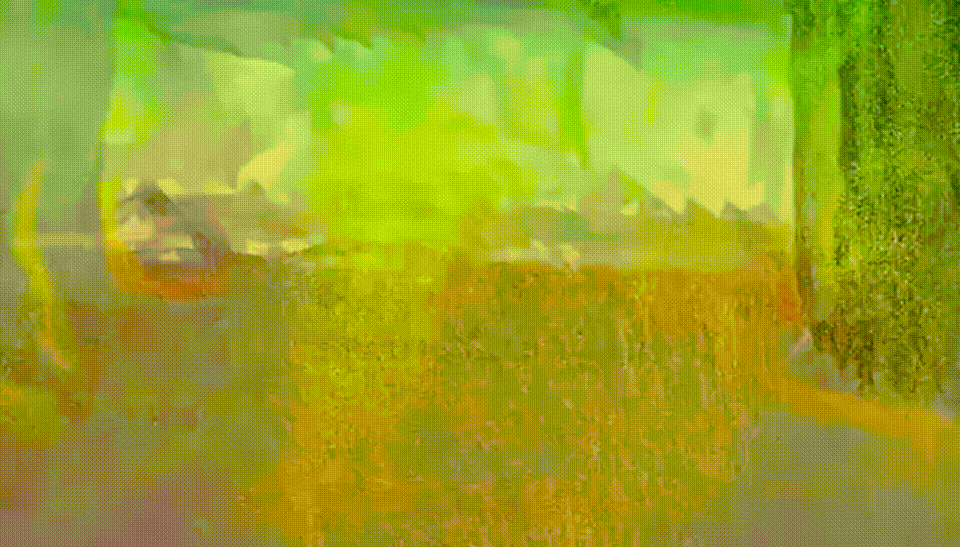
Associate inspection targets with map locations, organize movement, observation and recording, then assess how those functions work together along the same route.
This section presents earlier Kuanghai Mingmou research. Q1 mobility, payload, runtime and inspection capabilities require separate validation on the relevant prototype under documented test conditions.
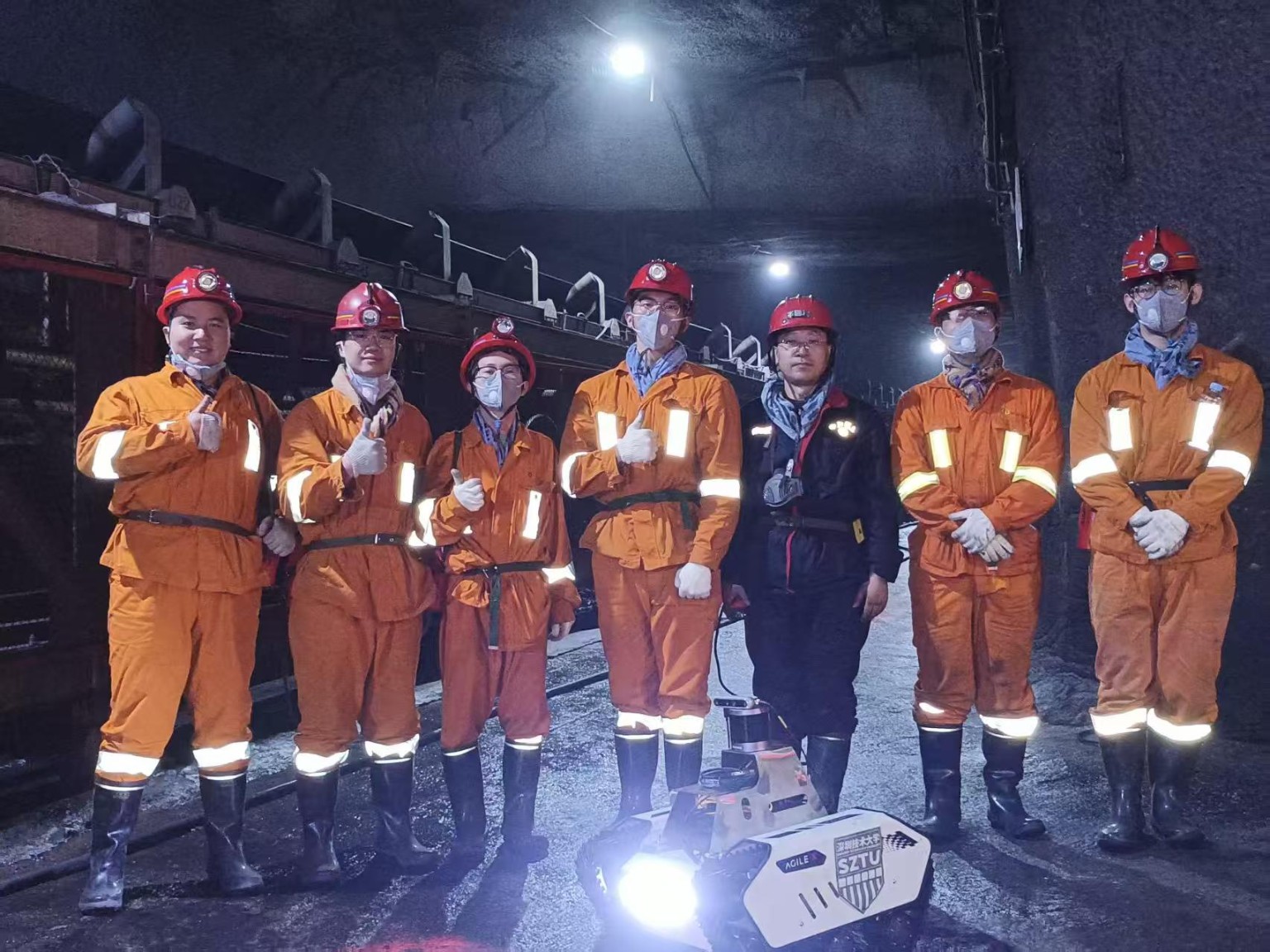
Check Q1 development statusThese photographs document access routes, ground conditions and equipment in an underground metal mine, providing context for mobility, sensing and communications.
The recording below shows a tracked platform underground. Q1 quadruped development demonstrations are presented separately.
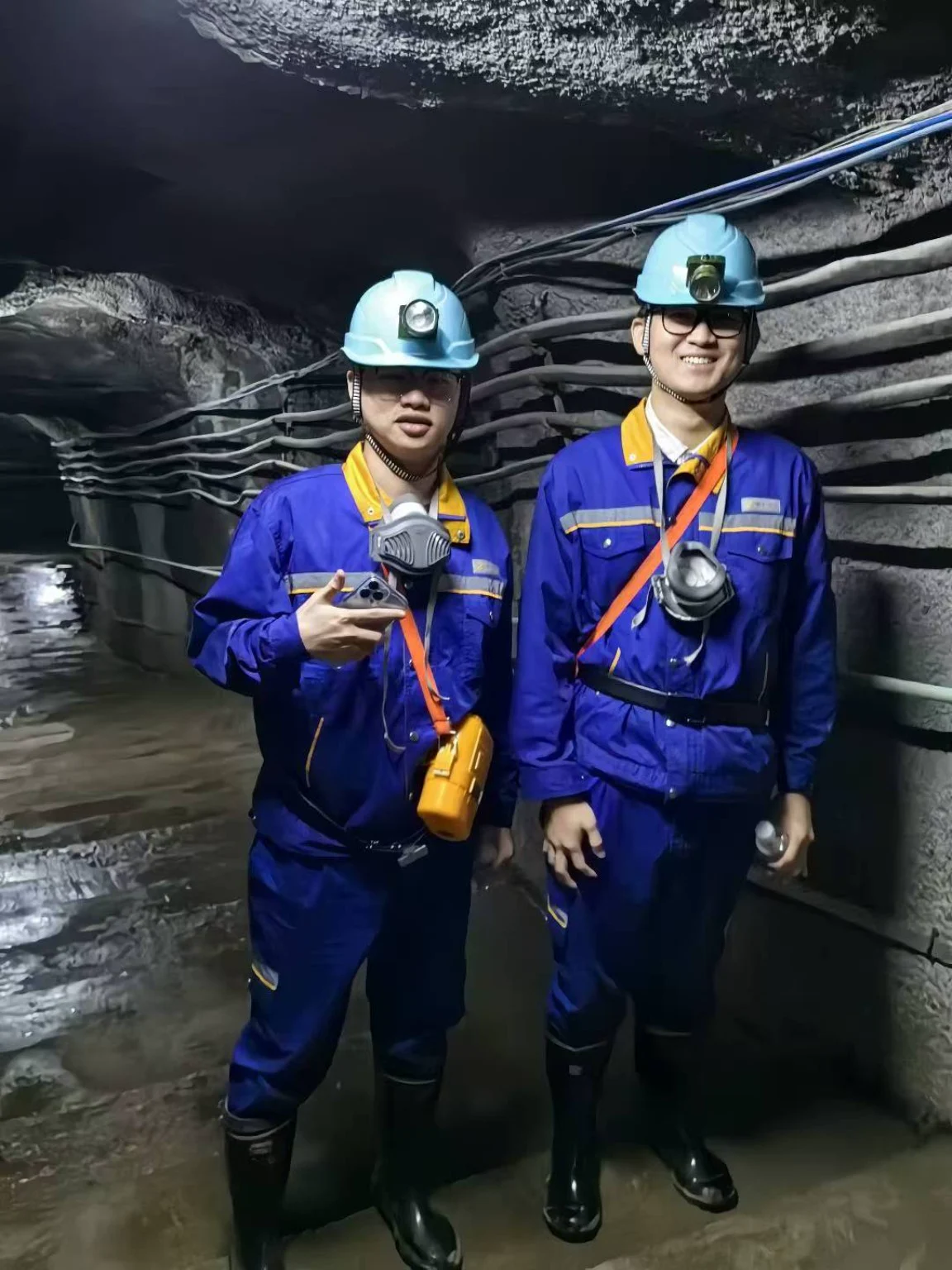
Low light, wet ground and confined passages place different demands on robot movement, sensor placement and communications.
The footage shows a tracked platform and helps inform site requirements. It is not evidence of Q1 quadruped performance.
Define the route, gradients, obstacles and inspection targets before selecting sensors, communications and field tests.
In development
Q1 is at the engineering prototype stage, with development focused on underground mobility, multi-sensor perception and inspection tasks. The concept rendering illustrates that direction; operating suitability requires complete-system and field validation.
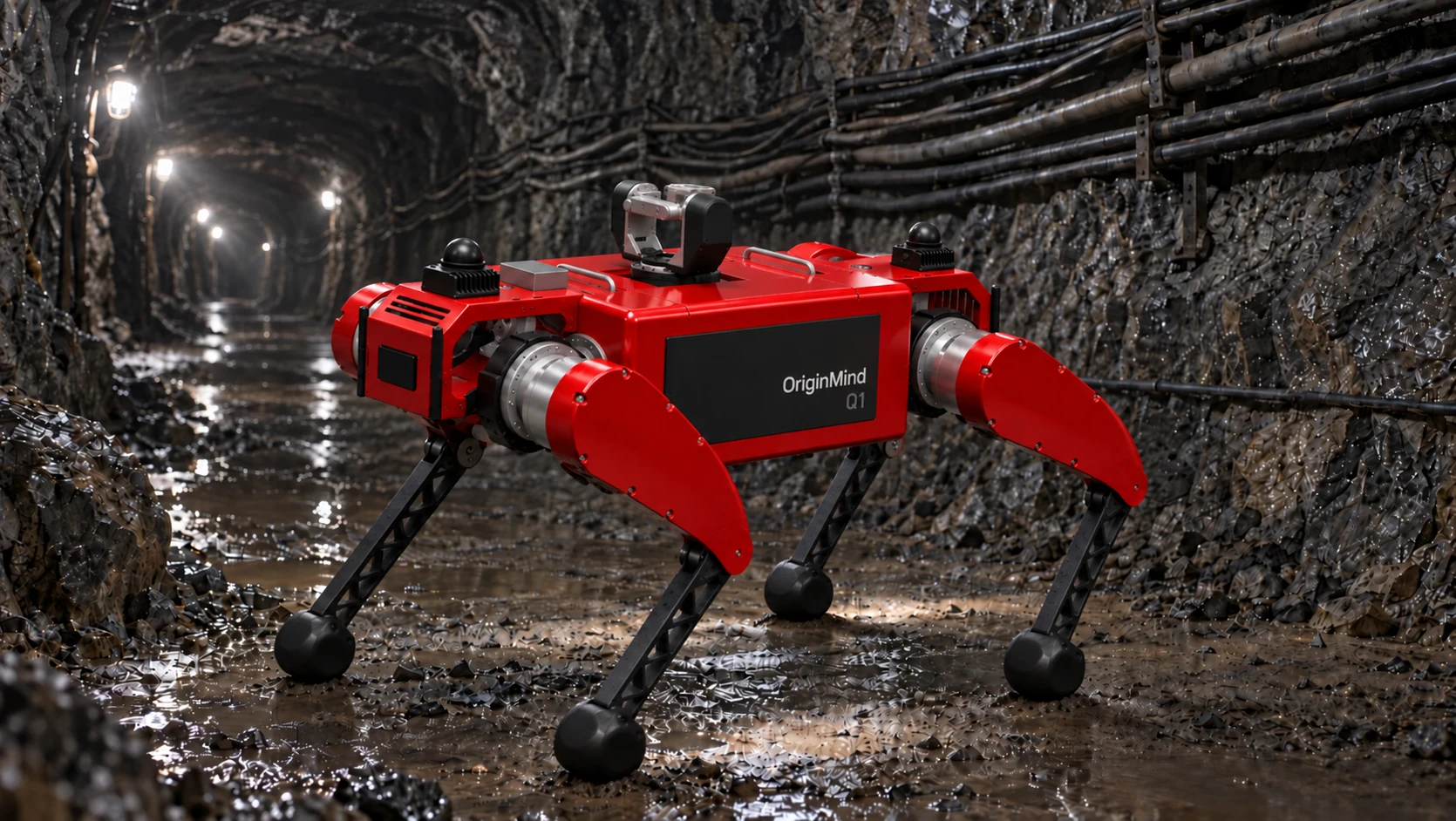 Q1 · In development
Joint validation
Agree on the task and conditions, then record results at each stage. Both teams confirm the metrics, number of trials and acceptance criteria.
List the route, equipment locations, site conditions and information to collect.
Record the platform model, sensors, software versions, communications and responsibilities.
Record arrival at targets, data collection, human intervention and responses to conditions such as connection loss or low battery.
Review original records, task completion, open issues and the scope of the next validation stage.
The underground video shows a tracked platform. The point cloud comes from the Kuanghai Mingmou project. Both provide site and research context; see the Q1 product page for its development status and demonstrations.
We can discuss inspection requirements, assess software integration for existing robots and design test tasks together. Q1 is at the engineering prototype stage, so the scope depends on prototype readiness and site conditions.
A mining demonstration alone cannot establish suitability. The model, hazards, certification and site access requirements must be reviewed before considering a test. Metal mine recordings do not demonstrate explosion-protection compliance.